Safety guide

Safer braking

Correct braking is crucial for feeling safe in city traffic. Learn how to shorten your braking distance, avoid typical mistakes, and react confidently in every situation.

A young man in casual clothing and wearing a bicycle helmet rides an eBike on a city street, crossing a red bike path. Modern buildings and passersby are visible in the background.

Correct braking with an eBike

Always do the following

  • Use both brakes simultaneously.
  • Apply the brakes carefully, depending on the surface.
  • Practice your braking technique regularly in a safe place.
  • Ride with foresight – especially at intersections and along busy roads.

Safety and riding technique

Why is correct braking important?

An eBike is usually heavier than a classic bicycle due to its design, which means that its braking distance is longer. An adapted braking technique is therefore not an optional extra, but a crucial factor in maintaining control in every situation. In dense city traffic, you have to react quickly to changing situations: Opening car doors, turning vehicles, or pedestrians suddenly crossing the road. Precision braking helps you to ride confidently and safely.

Avoid mistakes

Tips – better braking

Close-up from the rider's perspective, showing a hand on the handlebar grip of an eBike. The thumb rests on the LED controller, with its LED screen layout illuminated. The focus is on direct control and interaction with eBike technology.

Avoiding use of the front brake

Many eBike riders almost exclusively use the rear brake. As a result, they end up wasting most of the braking power and extend their braking distance. Every meter counts, especially in the city.

A woman wearing a helmet rides a white eBike in an autumn park.

Ignoring the ground surface

When riding on leaves, cobblestones or in wet conditions, reduce the brake pressure to prevent slipping and loss of traction. This is especially important in autumn or winter.

A man wearing a helmet rides his gray eBike through the city. His jacket flutters in the breeze, with buildings and trees visible in the background.

Sudden braking

Build up the braking pressure gradually so you have control even on changing surfaces and can fully enjoy your tour.

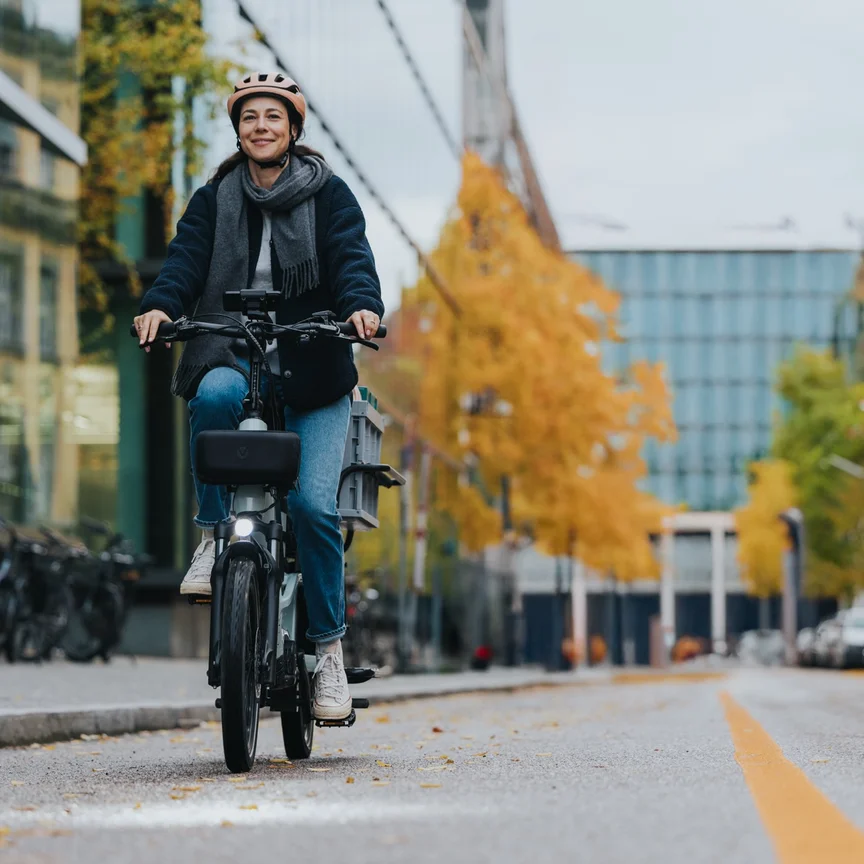
Shot of a woman on an eCargo bike riding directly toward the camera. She is smiling. Autumn-colored trees are visible in the background.

Ride with foresight

Anyone who rides with foresight will brake more calmly. Maintain a safe distance, observe the traffic and anticipate obstacles so you can make your way through the city more safely and relaxed.

Close-up of a Bosch eBike ABS on the front wheel.

Bosch eBike ABS

The Bosch eBike ABS can prevent the front wheel from locking up during heavy braking to help to keep your eBike more stable. This is a valuable safety benefit, especially in city traffic. 

Find out more

Improving your braking technique

Close-up from the rider's perspective, showing a hand on the handlebar grip of an eBike. The thumb rests on the LED controller, with its LED screen layout illuminated. The focus is on direct control and interaction with eBike technology.

Streamlining your position

When the forearm, wrist, and extended fingers form a straight line, this indicates that the brake lever angle is correct. Always keep one or two fingers on the brake levers to be ready to brake at any time.

A smiling woman rides her eBike on a red bike path along an urban waterfront. The image captures the joy of everyday cycling in the city on a sunny day.

Using both brakes

Always apply both brakes simultaneously. The front brake takes over most of the braking power as the weight shifts forward. The rear brake provides additional stability for your eBike.

A rider/eBiker is driving in a traffic-smooth area in an urban environment.

Practicing braking

Choose a safe place and gradually work your way up to an emergency stop. Actively shift your weight backward and downward. You will only develop a feel for the locking limit of your eBike by practicing.

Close-up of a handlebar held by a woman with both hands. She uses the LED Remote with her left hand.

Correct brake maintenance

Have your brakes and brake pads checked regularly by an eBike specialist so you can continue to ride reliably in the city.

A woman wearing a helmet rides her eCargo bike around a curve. She smiles as she looks ahead.

Braking more safely, even when loaded

Heavy shopping bags, child seats or luggage: Heavy loads affect braking behavior. Adapt your riding style to your cargo to ensure you reach your destination safely.

FAQs

Release the brake for a brief moment to allow the tire to regain grip, then immediately resume gentle braking. An ABS system performs this exact process automatically and much faster than you could perform it manually.

If possible, avoid braking when cornering. It's best to reduce your speed beforehand. If you need to brake on a bend, do so very gently and with your upper body upright.

The dynamic weight shift during braking presses the front wheel more firmly onto the road, which allows it to transfer much more braking force than the rear wheel. The rear brake primarily serves to stabilize your eBike.

The frequency with which your brake pads should be changed depends on your riding style, the road conditions, and the weather. Pads should be checked by a specialist at the latest when braking power decreases or grinding noises start to develop.

Well informed

Find what suits you

A woman suddenly brakes on her eCargo bike when a yellow ball bounces into the air in front of her. She looks startled.
More safety, riding enjoyment and flowBosch eBike ABS
Two people ride eBikes down a winding road. Guardrails line the road as it curves past a rocky cliff. Bright sunlight creates shimmering reflections in the scene, evoking a sense of adventure and freedom.
Braking technique guideSafer braking on tours