After 24 years, finally back in the bike park
Back in the bike park after 24 years and then crossing the Alps with Danny MacAskill: Tarek Rasouli has created a story with his Bowhead eBike that shows just how much is possible when you keep redefining your own limits.

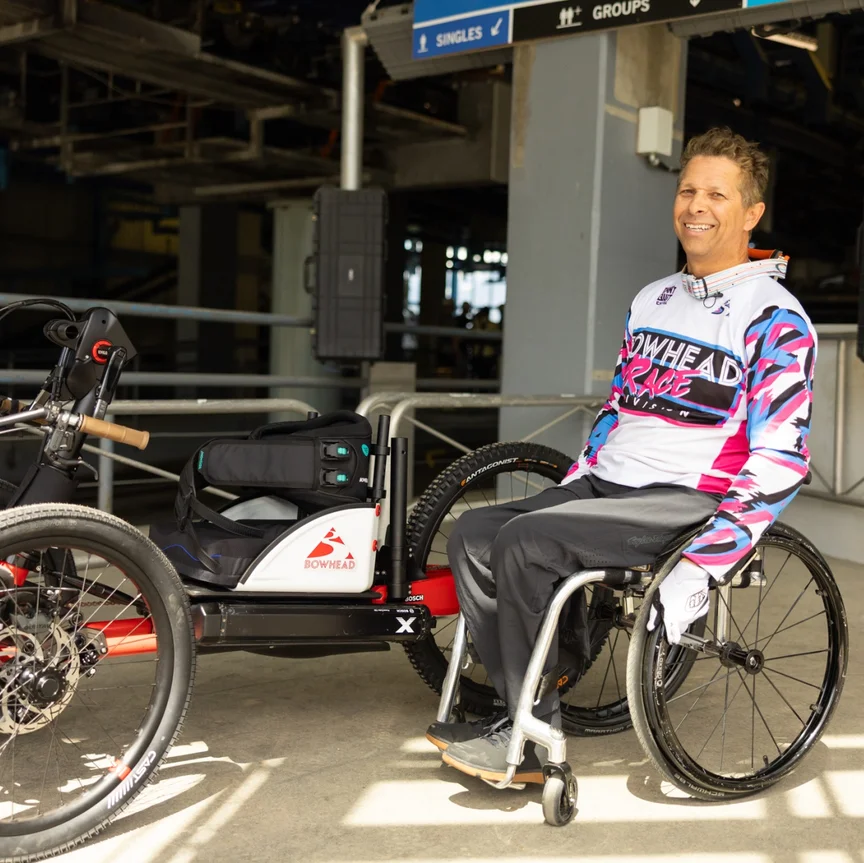
Tarek is well known in the mountain bike scene. Just a few years after his serious accident, he was already out and about in Munich on a handbike. But riding real bike park trails was a distant dream for him for a long time. After 24 years, he finally made it happen in the summer of 2026 at the legendary Whistler Bike Park.
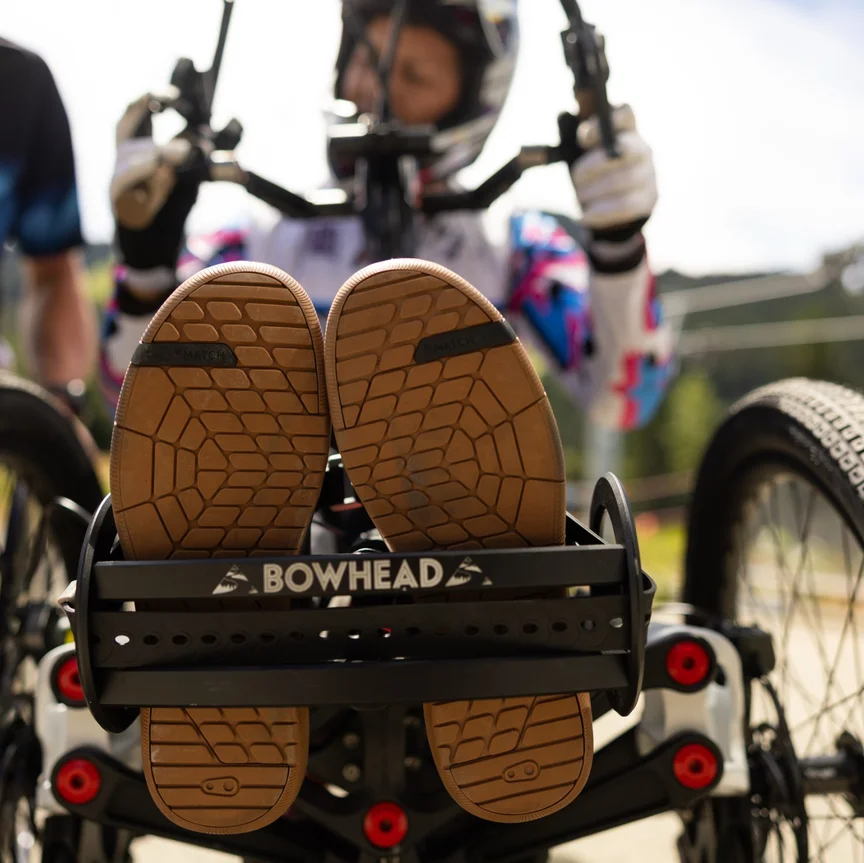
But Whistler was just the beginning. Together with Danny MacAskill, he took on the next challenge: crossing the Alps on his new Bowhead, an adaptive mountain bike with electric drive. Nine days, countless meters of climbing, and technical trails later, it was clear: this adventure was way more than just a bike tour.
In this interview, Tarek shares what motivates him, how riding an adaptive bike like the Bowhead has changed over the years, what Whistler means to him, and how he ended up crossing the Alps with Danny MacAskill.
Tarek, what should people know about you before we talk about your new eBike, and your crossing of the Alps with Danny MacAskill?
After many years on BMX, I was one of the first European freeride mountain bikers in the mid-90s and early 2000s. Globally, there were just a handful of pioneers in this space. In 2002, I broke my spine in Canada during training for a film shoot. Since then, I’ve been in a wheelchair. At first, I focused on rehab and starting a professional career—first as a freelance journalist at Bike Magazine, and then, in 2005, I launched my agency Rasoulution, specializing in brand communication in the bike industry. Among other things, we manage athletes like Danny MacAskill, Thomas Genon, Gabriel Wibmer, and Erik Fedko. For me, the new way of biking started with pure arm strength when I tried a handbike for the first time. The movement and experience were fun right from the start, but I was always a bit limited: I always had to stick to paved roads. Climbs over 12% were simply brutal. In spring 2024, I got a Bowhead RX with a Performance Line CX, and since then, my life on the bike has taken a super positive turn. Now I can ride with more friends than before, the bike has full suspension and MTB tires, and thanks to the Bosch drive, I can even tackle steep hills over 20% and gravel climbs. It’s amazing — and even with e-support, I can keep training my fitness. Strength and endurance matter just as much on the new bike.
After 24 years, you took your new Bowhead back onto trails. How did that happen? And how did it feel?
I’d already tried a few mountain bike trails last year, but I always had respect for a real bike park. British Columbia is especially meaningful for me, since I had my accident there in July 2002 in Sun Peaks. Then, almost exactly 24 years later, I decided to go for it and ride in a real bike park again and in Whistler, where I first rode in 2000. In summer 2026, I was pretty blown away to be sitting in the gondola heading up. Luckily, I had Gustavo “Guga” Ortiz from Bowhead with me for support. At the trailhead, I was excited, thrilled, and felt that this was going to be a truly special day.
What was bigger—the anticipation or the respect for the first trail?
Oh, honestly, it was about 50/50, but the anticipation for the first descent with the new Bowhead RX was definitely a bit stronger.
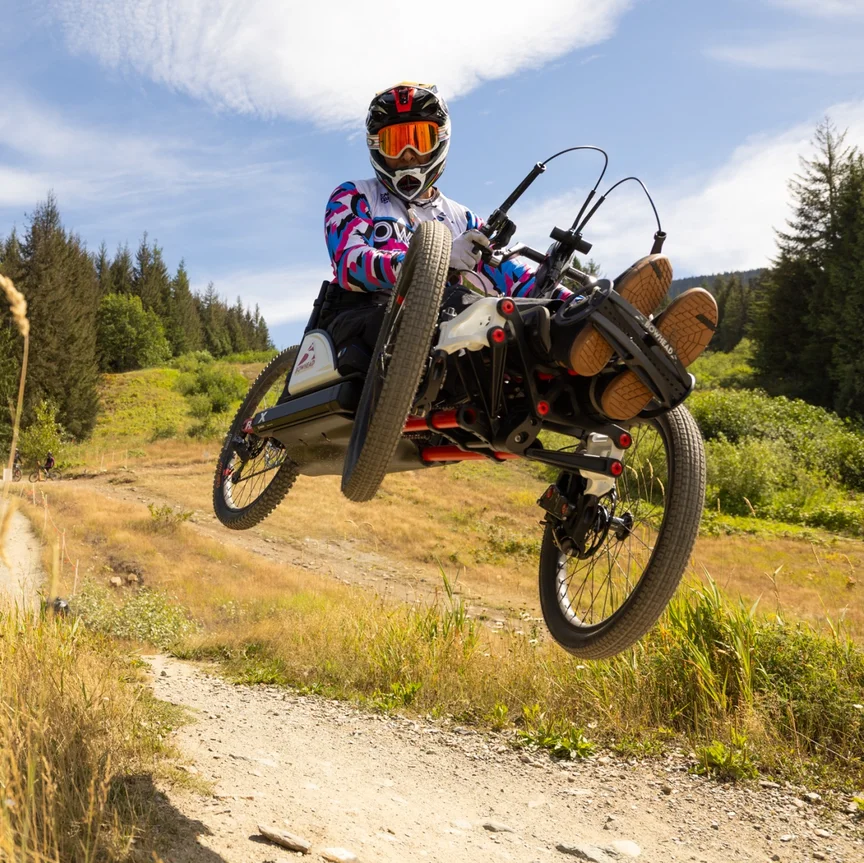
How was that first run for you?
At first, I needed some time to get comfortable and really find my groove. I followed Guga, and we rode the Crank It Up Trail. I started out a bit cautious, but then we had a jump session at the Joyride Skill Area, and I got more and more feel for the bike and for catching air. After that, we continued on Crank It Up, hit a few jumps, and it was actually a blast — I hadn’t felt that kind of joy on the bike for over 24 years, but it was back — I was totally blown away.
How did you get your new eBike? What makes it special?
I heard that Bowhead was launching its second generation, and since my Transalp project with bike park stops was planned for September 2026, I wanted the best tech for it. After a few chats with Bowhead, Bosch, and other partners, it was clear it would work out. The special thing about the bike is a new suspension system — the MoFlo suspension — with more travel, 115 mm instead of 75 mm before. The shock also dives less under braking, so you keep traction even when slowing down. I now have two 24-inch wheels up front, which let the bike roll over roots better than the old 20-inch wheels. And there’s a 27.5-inch wheel in the back.
The Bowhead comes with the Bosch Performance Line CX. What does that drive mean for you — especially uphill and on long rides?
The Performance Line CX Gen 5 has more power than my first Bowhead RX, which really helps with acceleration, like on jumps, and supports me on the longer climbs of the Transalp! On the Timmelsjoch stage, I even dialed back the motor’s support a bit in the eBike Flow app. My friend Mark Skarupa, who joined us in Sölden and up to Timmelsjoch, was still riding the first-gen Bowhead RX with the weaker motor — and I wanted us to crank up together. Now I have two 750 Wh batteries, so even more range than with my first bike. That’s a huge help, especially for long rides like the Transalp. 62 miles a day and more than 3,900 feet of climbing are possible now without stopping to charge!
“I hadn't felt this kind of joy on a bike for more than twenty-four years, but suddenly, it was back.”
– Tarek Rasouli
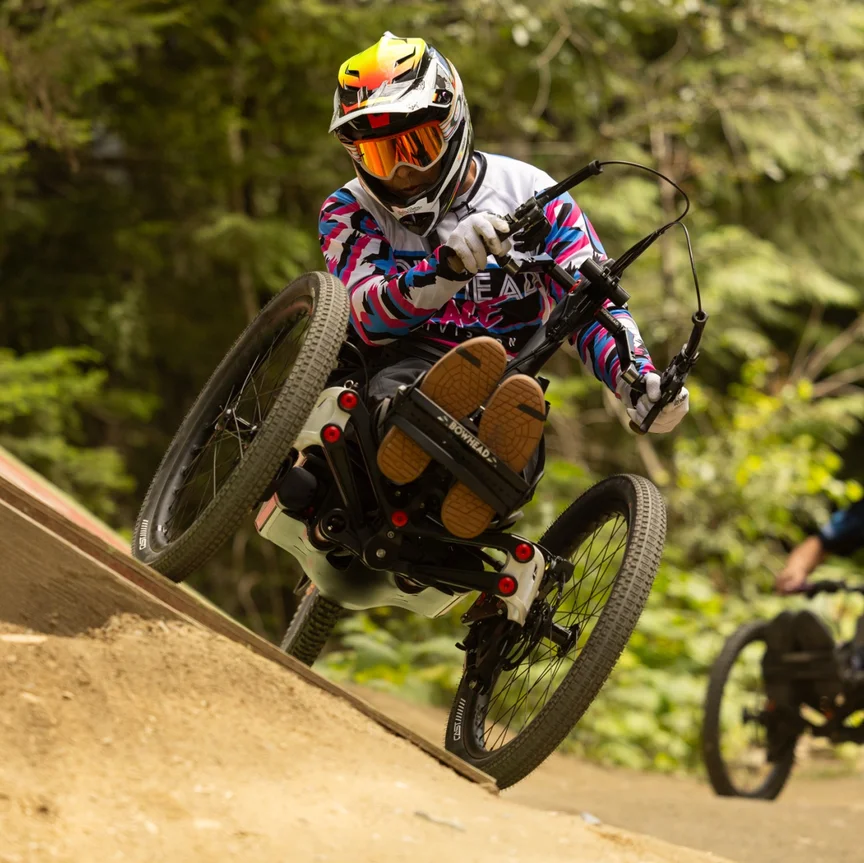
You ride a pretty heavy bike and generate power mainly with your arms. How important is the motor’s support for you?
Yeah, the bike weighs about 99 lb including the batteries. I crank with my arms, but without a motor, I couldn’t ride it uphill or move it on flat terrain for any length of time. Motor support is essential for anyone wanting to ride an off-road adaptive mountain bike.
What does a handbike need to do for you to really trust it on a trail?
Besides Bowheads, I haven’t ridden any other adaptive mountain bikes for trails, but I’m super happy with their tech. The front kinematics let you lean into corners—the front wheels and seat tilt together. That gives you agility, traction, and keeps you from flying out in turns. Brakes are super important, and downhill brakes are best. The rear tire matters too, and of course, the right motor is key for me. I’m really happy with the Performance Line CX Gen 5. It’s easy to use, gives extra power when needed on steep climbs, offers more dynamic performance, and the two big batteries let you ride 75–93 miles, depending on elevation.
What do you think the Tarek from 24 years ago would have said if he saw you riding the Bowhead in a bike park today?
Wow, that looks wild — and he seems to be having a blast!
You didn’t just ride Whistler with this bike—you even crossed the Alps with it. When did you realize this bike could do way more than just handle a trail?
Before my first real bike park ride in Whistler, I just rode road and gravel, except for two times when I tried easier trails. Steep climbs on trails or gravel are definitely exciting and a lot of fun—I didn’t know that before the Bowhead. But I didn’t expect it to be so good for jumping, like I found out at Whistler’s Joyride Skill Area. I had a jump session with Guga, and it worked pretty well—even with turning the handlebars and a feeling similar to my old mountain biking days.
How did you come up with the idea of crossing the Alps with Danny MacAskill?
Danny and I have worked together for over 17 years. We’ve experienced a lot—I’ve joined him for video shoots, events, and we’ve spent plenty of time together off the clock. Since I got my Bowhead, he wanted to go on an adventure with me. When I told him I wanted to cross the Alps and asked if he wanted to join, he was immediately in. We did a first test ride on the lake.bike trails near Villach in October 2025. That’s when we realized: it could work.
You’re both big personalities in the bike world — but with very different riding styles. What was it like to spend nine days together on the road?
It was an adventure full of fun, pain, and challenges—more for me, of course, but Danny was awesome. Uphill, he was faster, but I didn’t want him just cruising beside me, so I pushed myself, too. Downhill, I often rolled faster, at least on the roads coming down from Timmelsjoch or sometimes on gravel downhills. The bike park was definitely a challenge for me, but with Danny, it always felt fun and, in a way, safe—he never pushed me past my limits. It was clear all he cared about was us having fun together and reaching the bottom safely.
“I never knew if I’d ever be able to pull off this kind of adventure, since I kept facing health challenges.”
– Tarek Rasouli

Crossing the Alps is a huge challenge for many mountain bikers. What was the biggest challenge for you?
First of all, like anyone else, I had to get fit, which meant intense preparation that still had to fit into my work life. I can’t push past my limits, and I know that from my own history. For example, my legs get really cold at temps below 15 degrees, so I need super warm pants and waterproof shoes. Long times sitting under load on the bike are a big challenge, too. I actually wanted to do the Transalp in spring 2025, but I wasn’t ready and got a pressure sore just before the trip. Instead of the Transalp, I was stuck on the couch. This year started out much better—I rode a lot and felt fit, but then got another small pressure sore. I didn’t get back on the bike until the start of the tour, and I was unsure if I could really do the Transalp. But we started as planned.
You rode from Munich to Riva del Garda. When was the moment you realized: “We’re really going to make it”?
Honestly, I felt that way when we arrived in Sölden. Riding the bike park in the Bike Republic gave me a boost of courage and momentum. Knowing it would be much warmer in South Tyrol and Trentino after the Timmelsjoch helped, too. Sure, the climb to the Timmelsjoch was long, but uphill riding is always fun for me and pushes my endurance, which I enjoy.
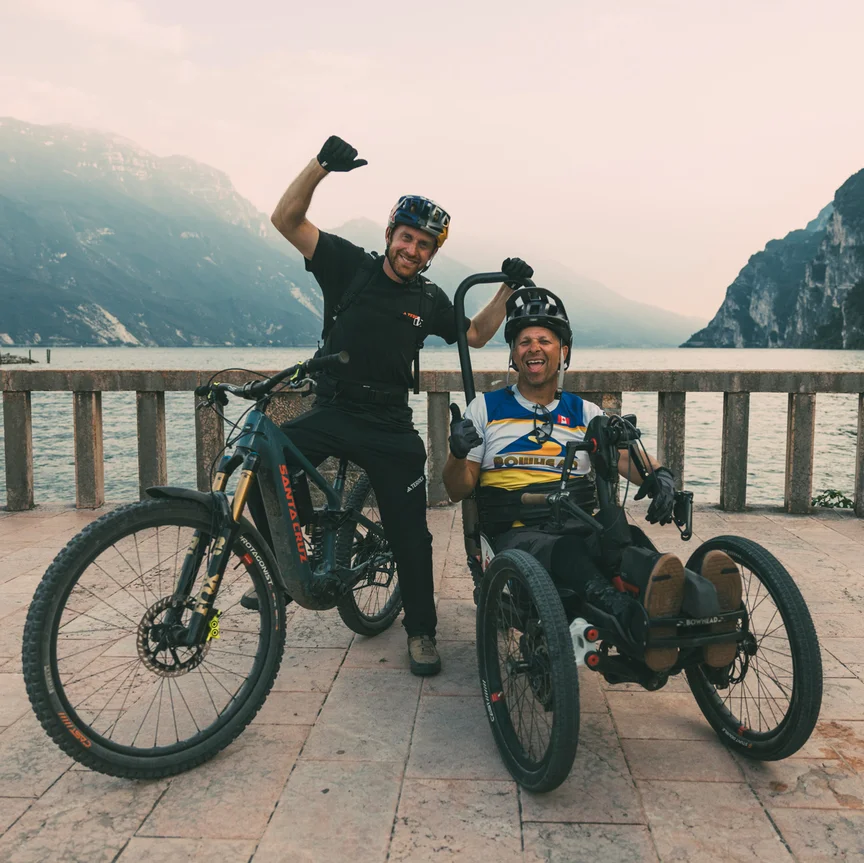
What happens emotionally when you arrive in Riva after nine days and know that what was just a dream for years has really happened?
When I arrived, it felt like a huge weight had been lifted off my shoulders. I never knew if I’d ever be able to pull off this kind of adventure, since I kept facing health challenges. In Riva, I realized Danny and I had made my dream come true — riding our bikes across the Alps from Munich to Lake Garda. It was incredibly beautiful, and honestly, it was a real flood of emotions — full of happiness, relief, and exhaustion. Maybe I was even a little proud that I pulled it off despite all the difficulties in the run-up.


